AI Team Building
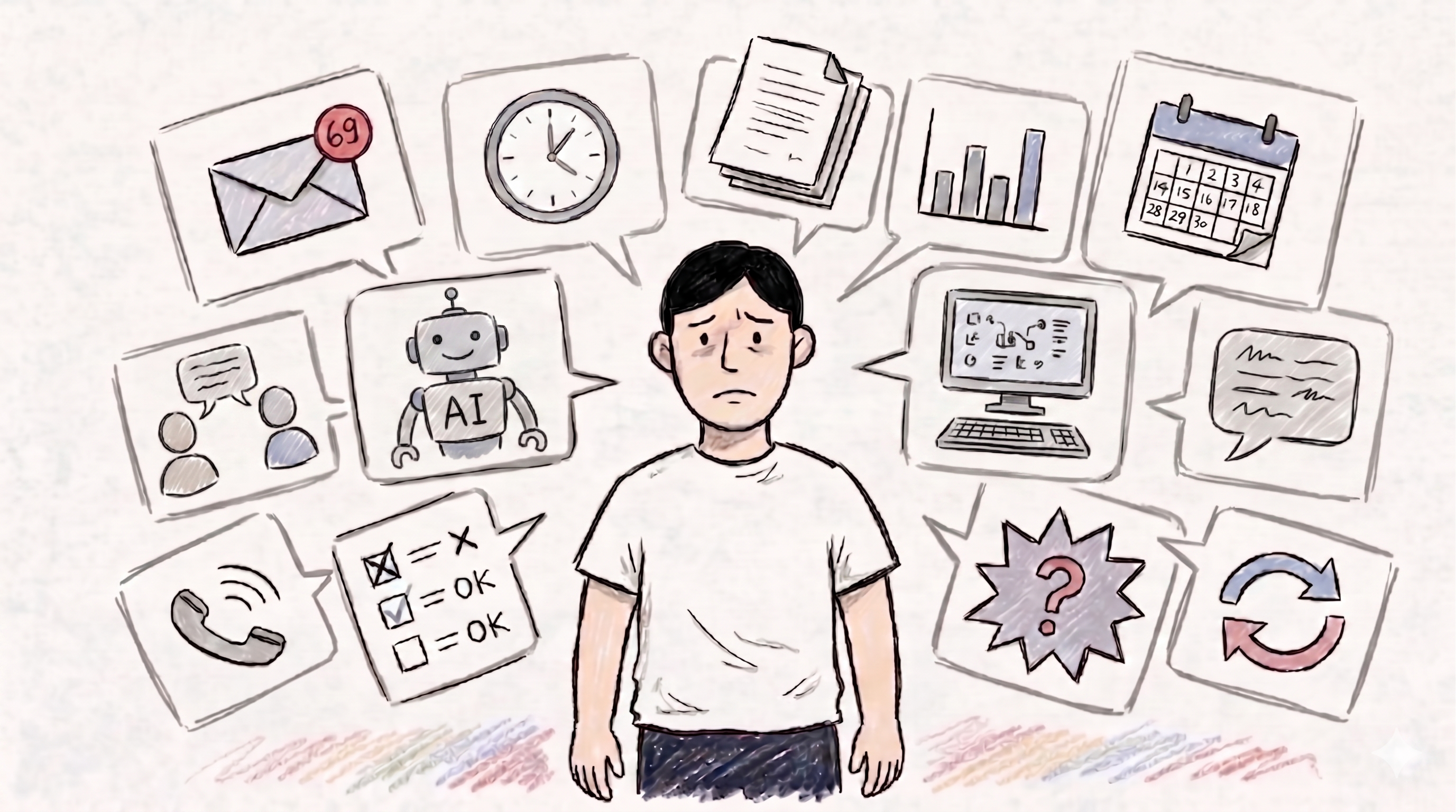
Does any of this sound familiar?

For many organizations, "using AI" has become the goal itself.
What matters is continuous improvement.
When improvement stops, results stop too.
This is the conclusion we've reached:
It's not about handing everything over to AI. And it's not about using AI as just another tool.
Instead, work with AI as a teammate —
one that continuously drives improvement.
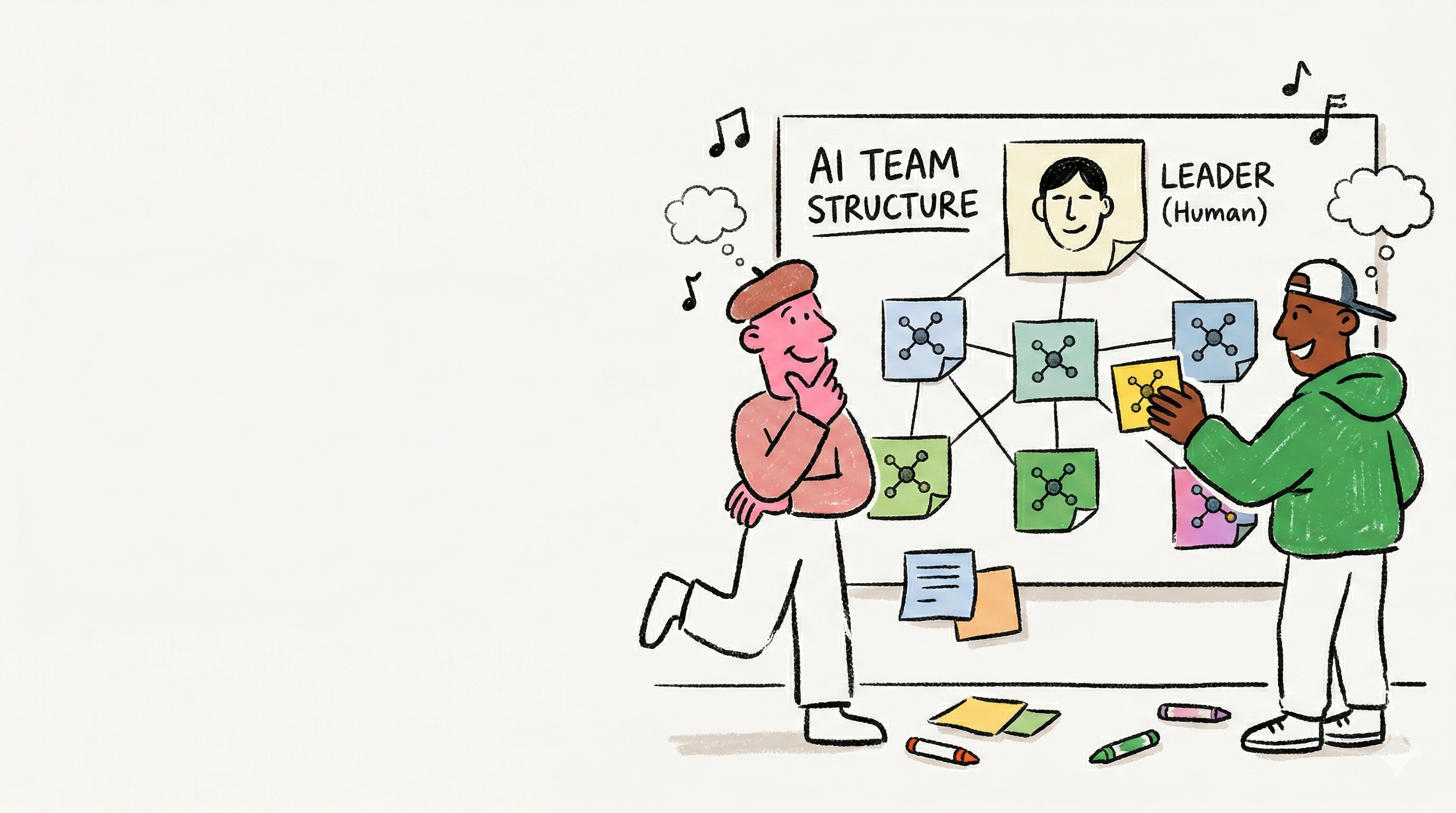
We build and operate AI teams that work alongside people.
What is an AI Team?
AI performs best when it's
designed as a coordinated team.
*
* Also helps reduce
hallucinations.
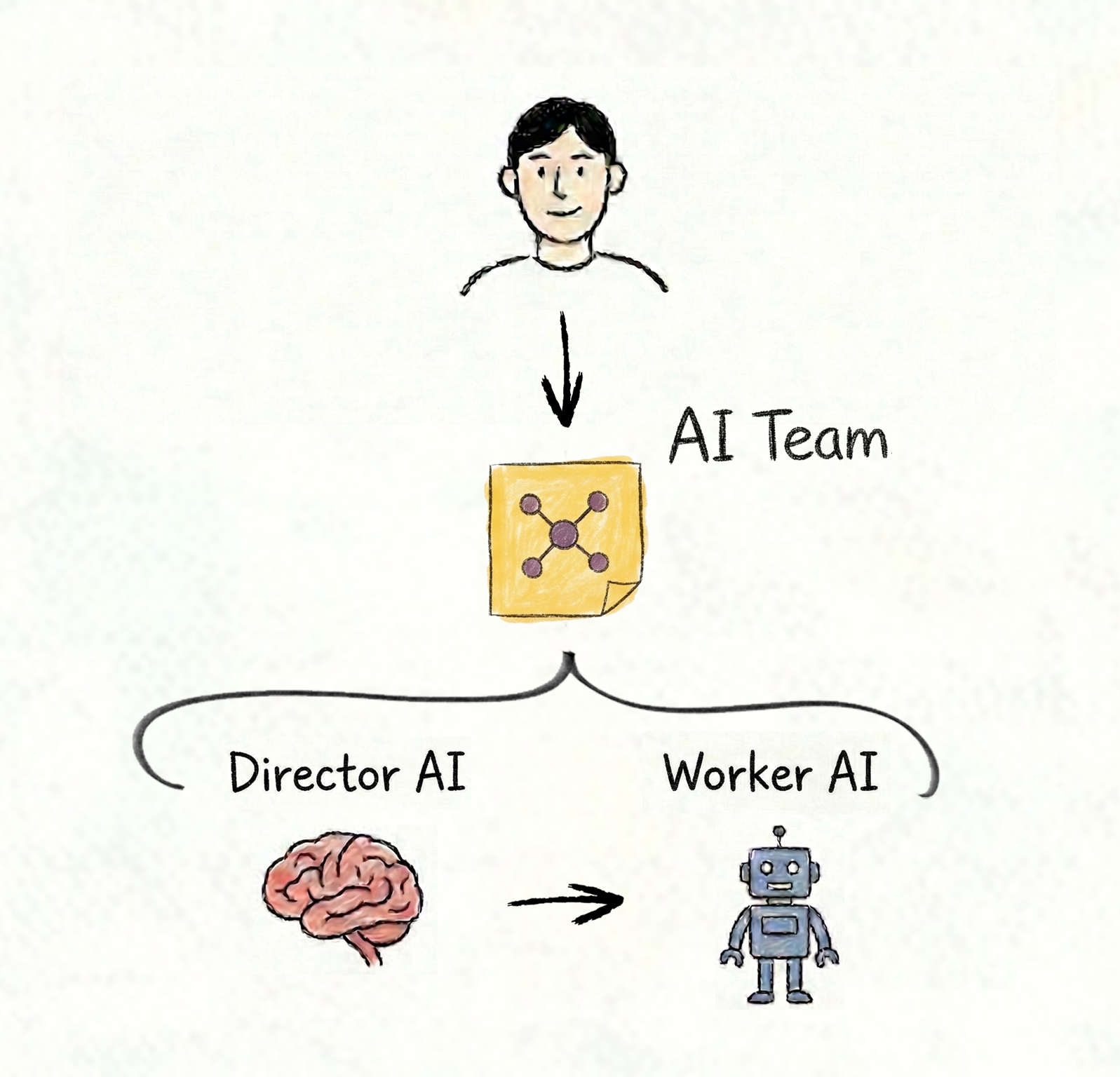
Each AI team consists of:
· Worker AI that executes tasks
· Director AI that oversees the system
The Director AI oversees the system, while the Worker AI handles execution.
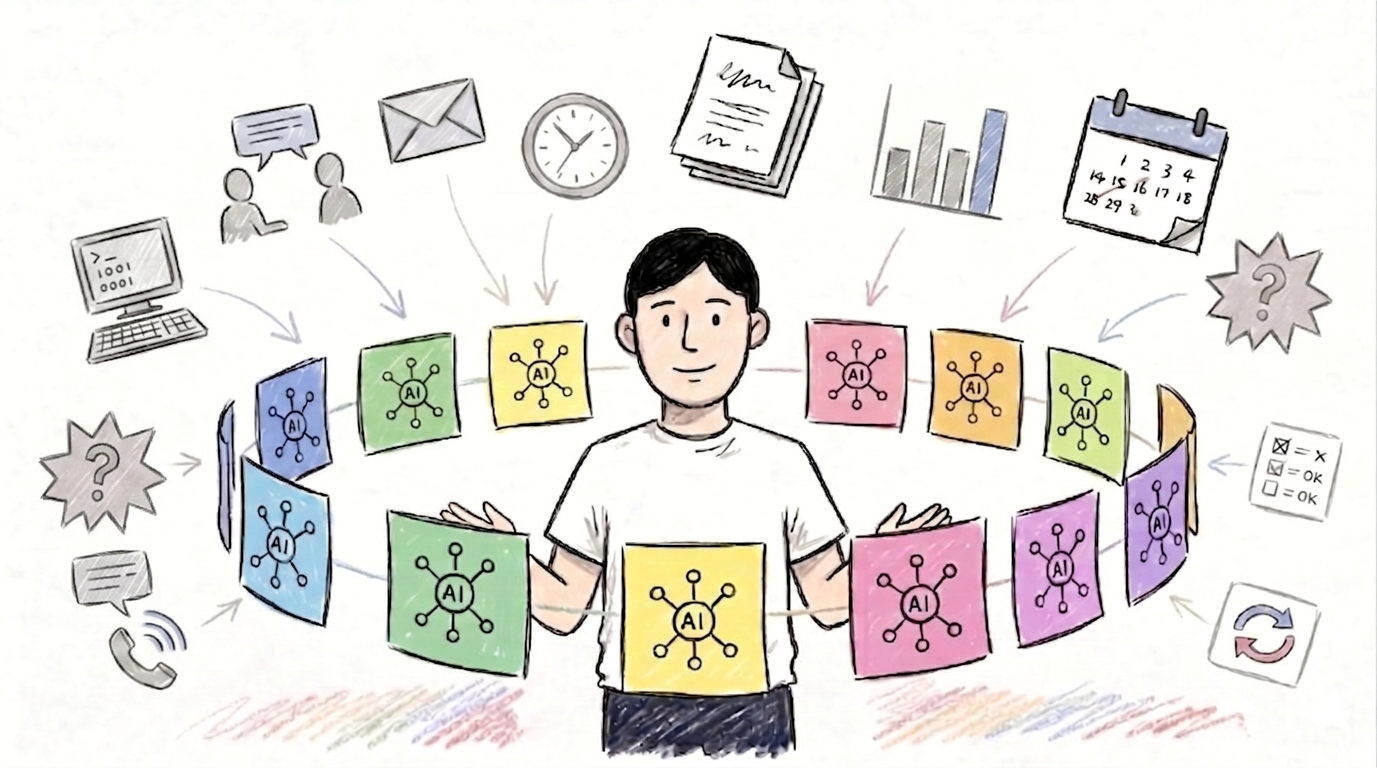
By deploying this AI team,
your organization becomes one that improves 24/7.
People stay focused on decisions. AI takes care of execution.

導入効果
Before

After
* Based on feedback from clients using the service. Results may vary.
Implementation Process
Start small with a single AI team.
Then expand step by step as results are
validated.

STEP 1
Organize current operations

STEP 2
Design and build the right AI team

STEP 3
Launch and operate your AI team
Pricing
Initial Setup
(Industry
Reference Pricing)
Ongoing Operations
(Industry
Reference Pricing)
Pricing depends on the AI team structure and scale.
Start small and expand step by step.
Implementation works alongside existing operations.
Voice
"What if we can't make use of it again?" That concern turned into surprise as work started moving on its own.

Honestly, we were
skeptical at first. We had tried AI before, but never succeeded in making it part of daily
operations.
Once implemented, the AI team started operating naturally, and improvement became
continuous. Tasks that used to stall simply kept moving forward.
This wasn't just another AI tool. Because each AI had a role, the work actually got done.

At first, we
didn't fully understand why AI needed to function as a team.
But once we started using it, the
difference became obvious. Unlike isolated tools or agents, the AI roles worked together as a coordinated
team. That's what made operations continue running day after day.
We eliminated key-person dependency by systemizing operations with AI teams.

Our operations
relied heavily on specific individuals, which created issues with speed and consistency.
After
implementation, operations became structured, and AI teams kept everything moving continuously. It feels
like we're finally becoming an organization that no longer depends on individuals.
By letting AI handle execution, I was finally able to return to the real work of leadership.

Daily operations
left no time for improvement.
Now that AI teams continuously operate behind the scenes, I have far
more time to focus on decision-making. It's not that there's less to do — it's that I can finally focus on
what actually matters.
We could introduce AI teams without restructuring the entire organization.

What worked well
was being able to introduce AI teams selectively, without overhauling our organization or
workflows.
Instead of changing everything at once, we introduced AI only where necessary — which made
adoption smooth for the team.
We never felt lost figuring out what should be handled by AI.

At first, it was
difficult to decide where AI should be involved and where humans should stay in control.
But from
planning to implementation, we were guided through the entire process. It never felt like simply introducing
a tool — it felt like building a team together.
FAQ
Not at all.
We design and build AI teams so they can be operated without specialized
knowledge.
We also provide ongoing support after launch, so the AI team can continue improving and
evolving over time.
It depends on which tasks are assigned to the AI team, but much of the operational work can be handled by
AI.
However, this is not a fully hands-off AI agent service. Human judgment and decision-making remain
at the center of the system.
In most cases, yes — as long as there are no technical restrictions.
We design the
system to fit into existing operations without major disruption.
It depends on the size and structure of the AI team, but most implementations can be completed within
three months.
We recommend starting with a single AI team and expanding step by step.
ChatGPT is a standalone AI model. Our service is designed as a coordinated AI team where multiple AI roles
work together.
Depending on the use case, we combine tools such as ChatGPT, Gemini, and Claude.
A single AI can already do a lot.
But for operations to continue running consistently, it's
important to design specialized AI roles instead of relying on a single general-purpose AI.
By
connecting those AI roles as a coordinated team, operations can continue running without
interruption.
For example:
· AI for strategy (ChatGPT)
· AI for research (Gemini)
· AI for
landing pages (Claude)
By assigning the right AI to each role and connecting them as a team,
performance improves significantly.
This service is built around a simple principle: Humans make decisions. AI handles execution.
At the
beginning, human involvement can remain broad. Then, over time, the system can be gradually optimized.
AI accuracy depends on the model being used, but system design has a major impact on stability.
We
design AI team structures that maximize performance while minimizing hallucinations. This helps achieve
both accuracy and consistency.
We're not a company that simply uses AI.
We build organizations where AI
functions as part of the team.
Action
The choice is simple:
delay change, or evolve your organization starting today.